The first real entry I can find for Plough Planes is in the 1861 Catalogue and presently I strongly suspect that these planes [along with most other MARPLES wooden planes] were made for MARPLES by MOSLEY in London.


The 1877 Catalogue is a little richer, with numbered items:
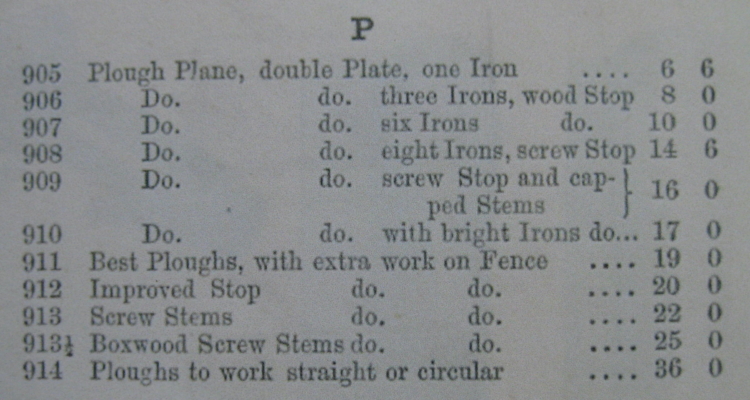

Next is 1897:


In 1909 we again have a number system change:


The 1921 Catalogue entry is here:

By 1928 we have this:


Just before WWII in 1938 we have these listings:

Two decades later in 1959 the range certainly has been reduced:

The last listing that I can find is in the Price List of April 1962 wherein #2903 is listed at 160/-,
#2905 is shown as 176/6d, #2907 is 200/- and #2909 is listed as 220/-.
The March 1964 Price List shows no listings for any of these great planes, and the end of a 100 year old era.
Here is a table showing the availability of the MARPLES plough planes from 1897 onwards.
1909 saw an Item # change. The option of having the front plate shaped as a ‘Skate’ was available up to 1921 and after then could only to be had on #2910 and #2912 .

Below I will try to show the characteristics of the various planes over time. But trying to date these planes is, as always, very difficult.
1]. This plane may be the earliest that I have because it is stamped on the nose [ because the blade was adjusted by striking the heel of the plane] with a single Shamrock mark [<1875] but this mark may well have been used well into the 1880s, from my experience. What is odd about this tool is that the short 7.1/2″ body has a fence that is rivetted to the stems, when most older examples have a countersunk screw bolt connection [see later]. The Boxwood stem wedges appear to be less thick than later examples.
The stems are capped and the skate screws are flat counter sunk. This may be an early #1037.
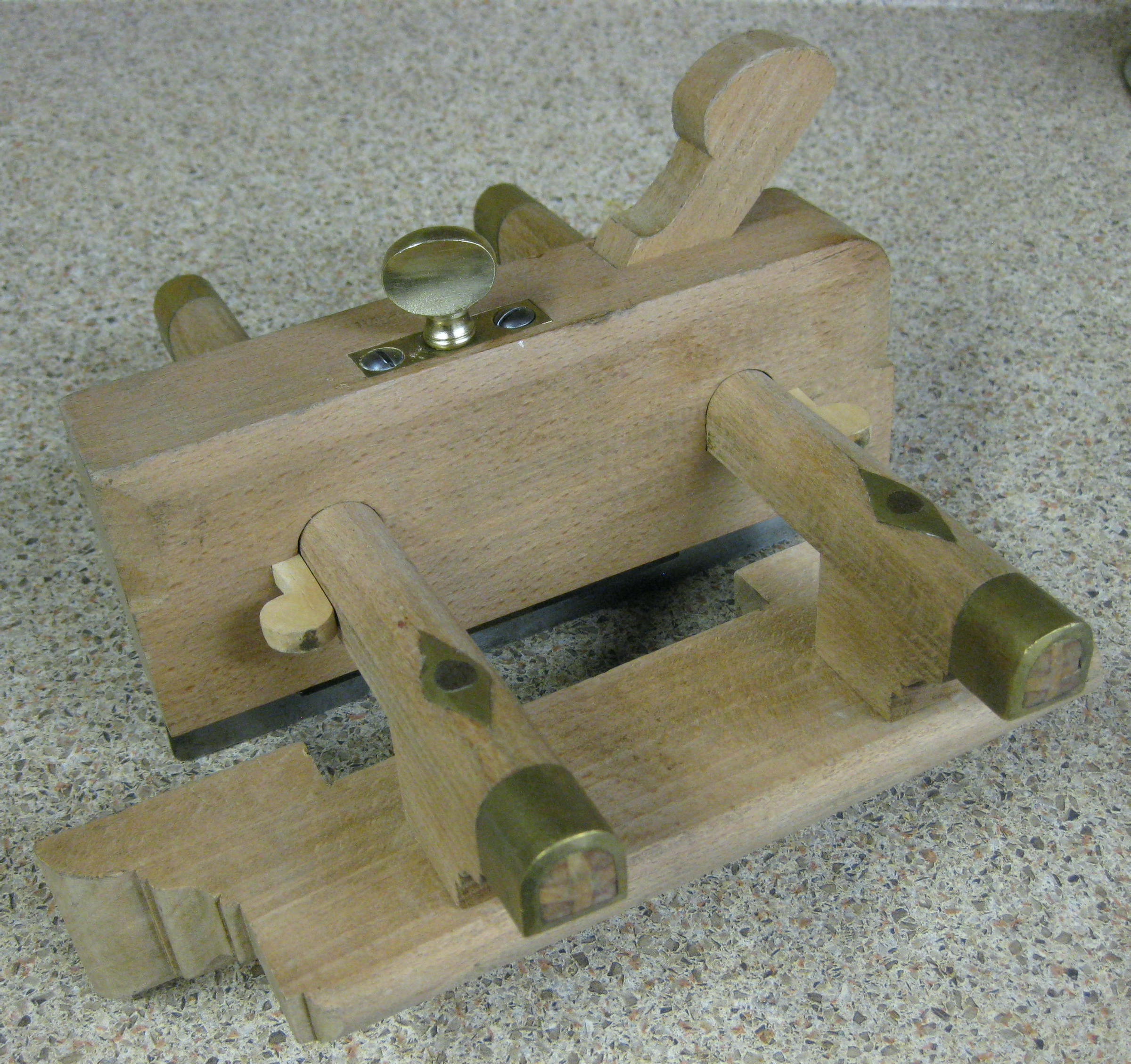


2].
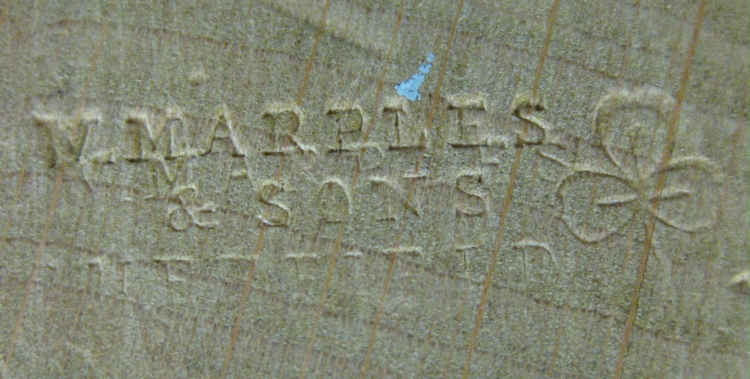
This plane is strange in that it has an ‘I.Sorby’ mark on the toe and a Marples transfer on the fence. It is very possible that this could have been on the cusp of the I.Sorby mark buy out of ‘Turner Naylor & Co Ltd.’ by MARPLES in 1909. The fence is rivetted to the stems from below culminating in a brass diamond cap on the top of the stems. The skates are connected to the body by oval headed slot screws. this is probably plane #1040 or #2907 after 1909.


3].
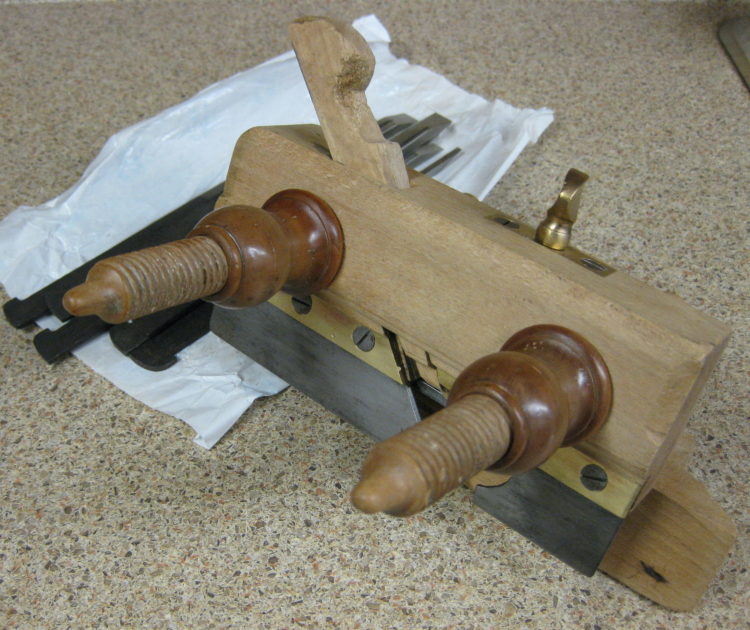
This plane has the ‘spiral figure of eight’ mark which I date to c.1900. It has Boxwood stems which have pointed ends and Counter sunk slot screws are used to secure the fence to the stems. The stem securing nuts on the fence side of the body are in Boxwood and smaller than on later issues. The Boxwood securing nuts on the other side of the body are also made from boxwwod.sThe cutters are not marked and are not polished. Note: the brass backing to secure the depth gauge stop. I do not know when this thick brass U shaped insert was replaced with a thinner fancier brass plate, but it may have been in the 1890s. This is plane #1042 [#2911 after 1909]


4].
Another ‘spiral figure of eight mark‘, capped and with fence screwed to the stems. Plane #1039 [#2906 after 1909]


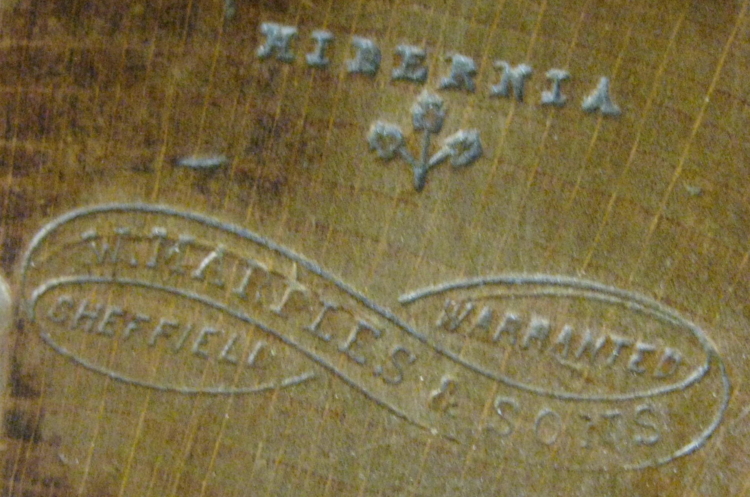
5].
On this plane can be seen the early Wedged depth gauge, ‘Trade Mark‘ within the Marples mark and no caps being on the ends of the stems. Either #1034 or 1035 [#2901 or #2902 after 1909]. I suspect this plane is c.1910.


6]. This plane shows the Boxwood nuts and stems….note the elongation at the distal end of the stems. This is the same as Plane #3 above, but has a modified fancy brass plate at the depth securing bolt and larger boxwood stem securing nuts.


7]. This one has a rivetted fence, rounded nobs to the Beech stem ends, Beech nuts and a standard MARPLES stamp. Plane #2909.


8]. This boxed plane is marked with WD up arrow 19 on the cutters [no other mark], which indicates that it may have been manufactured in 1919, or that it was marked on that date. But since the Govn’t Inspectors/markers operated in a special room at the MARPLES factory, it is likely an accurate date. The skates have counter sunk oval headed slot securing screws to the body and the capped stems are rivetted to the fence. The stem wedges are from Boxwood, as are most of these planes, and the toe of the body has a standard impressed MARPLES mark. { By ‘standard’ I mean that the mark existed for so many years that it adds nothing to our knowledge to enable us to identify a date of manufacture.}. You will see a repair to one of the stems because that stem, when I received it, had previously received the standard British army repair….a tosh job!! It is plane #2904 or #2905 in 1921 [there is no ‘extra’ work on the fence].


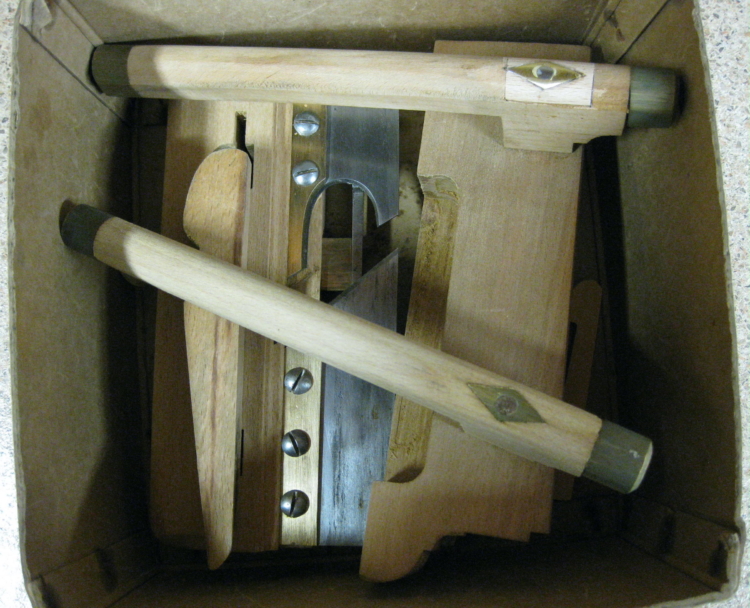
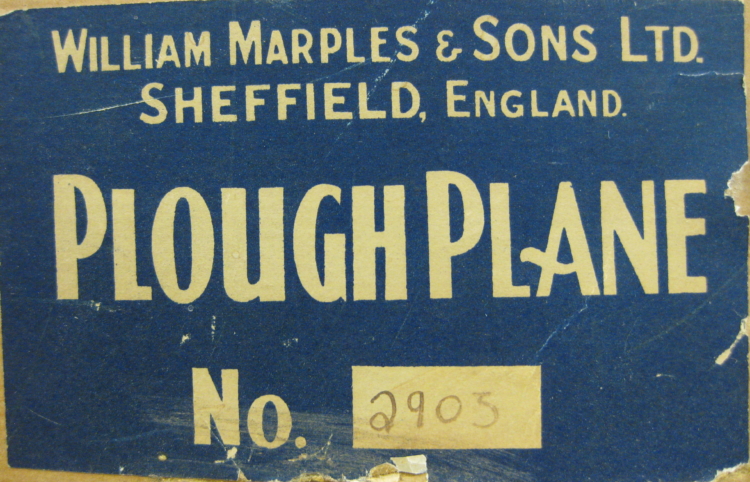
9]. You will never find a better example than this MINT plane.[#2903] It has ‘I.SORBY‘ impressed into the toe of the plane and also a MARPLES transfer on the side. The fence is rivetted to the stems and there are oval counter sunk slot screws securing the skates to the body. The ‘Turner Naylor & Co Ltd‘
[with the I. Sorby mark] was purchased outright by MARPLES in 1909 and I presume that the stock on hand, including wooden planes in the process of completion and having already received the impressed I.Sorby mark on the toe, could therefore have received the additional MARPLES transfer at that time. Therefore could this plane be c.1909?


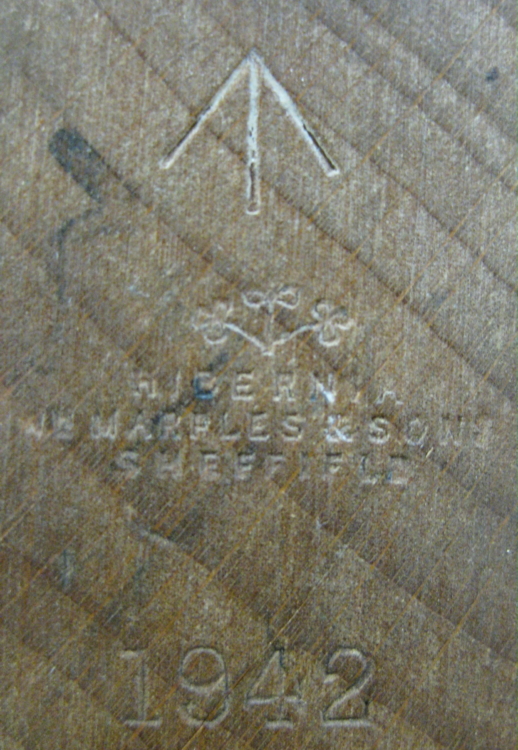
10] This plane is marked on the toe with a WD up arrow 1942. I also have an exactly similar plane marked 1944. The skates are rivetted to the body and the fence is rivetted to the capped stems. Boxwood may have been in short supply during WWII, or were the Govn’t Inspector pencil sharpeners exercising their power by insisting that MARPLES use a cheaper African hardwood for the wedges that held the stems in place?
Plane #2905?


These planes were very short lived as I can find them only in 1897 and 1909. So maybe they were available slightly outside of those dates.
The 1897 catalogue lists these under ‘Bull-nose and Chariot planes‘. Can we therefore assume that the Beech Bull-nose plane was offered before this date, but in a not Improved form??
You will see that the Beech Bull-nose plane has a different front to that of the Boxwood.
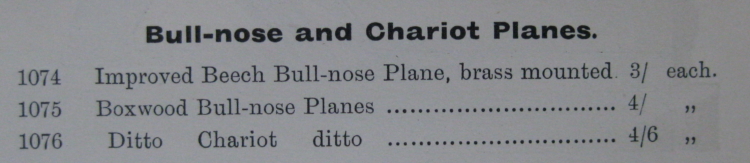


And the 1909 catalogue shows these planes, with Item number changes, under Bull Nose or Chamfer Planes. A note here is that the Chariot Planes were only ever offered in Boxwood:


Photos of some planes:
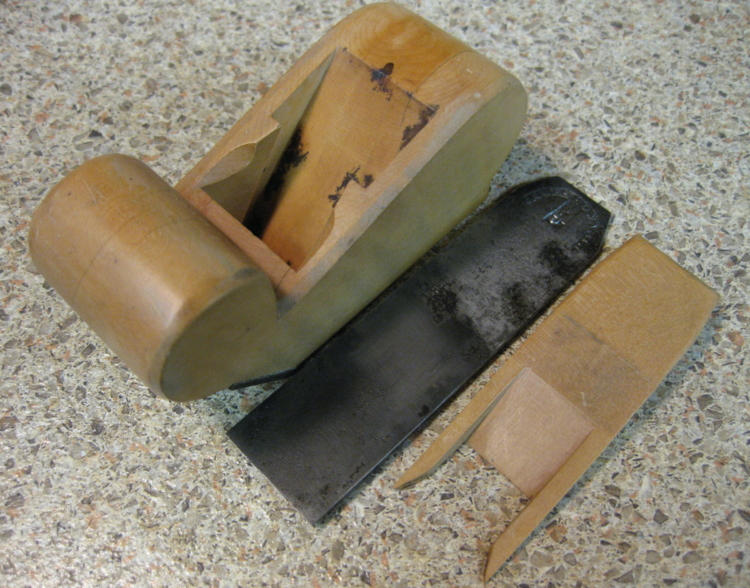
The first plane is a Boxwood Chariot plane having a total length of 3.3/4″ , width is 1.3/8″ and with a 1″ blade. The top of the nose shows the ‘W. Marples & Sons‘ mark along with ‘PRESTON MAKER’. Presently I do not know whether this indicates that Edward PRESTON made the plane for MARPLES.
The blade has the James Howarth mark.


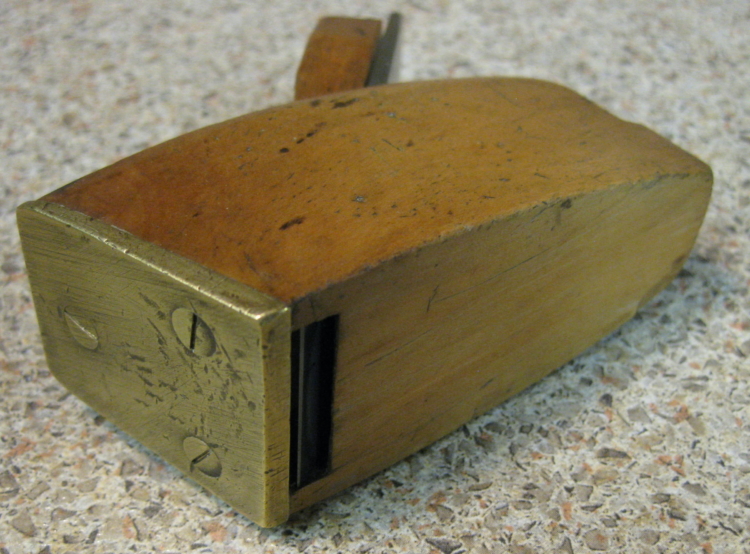
And here is the Bull-nose plane in Boxwood:
The top of the nose is marked ‘W. MARPLES & SONS‘ and the blade is marked ‘WARRANTED‘



I must assume that these planes were used to help form the round cross section of Masts for ships, as the name implies! At various stages they appear in the catalogues under ‘Sundries’; ‘Mast and Fork Shaft Planes‘ and ‘Mast and Spar Planes‘. A Fork Shaft plane was a similar plane to a Mast Plane but was used for rounding handles and similar work and was a single iron plane.
The first reference I can find is in 1897, so we can assume that the planes may have been introduced a couple of years before then.

In 1909 they are re-numbered and listed thus:

We see this [below] in 1921, but I would have assumed that there would have been a price increase after WW1. So from 1897 to 1921 there was no price increase! Amazing social stability.

In 1928 we are, for the first time, shown a drawing of the plane. I do note that the planes now are called ‘Mast or Spar Planes‘ :
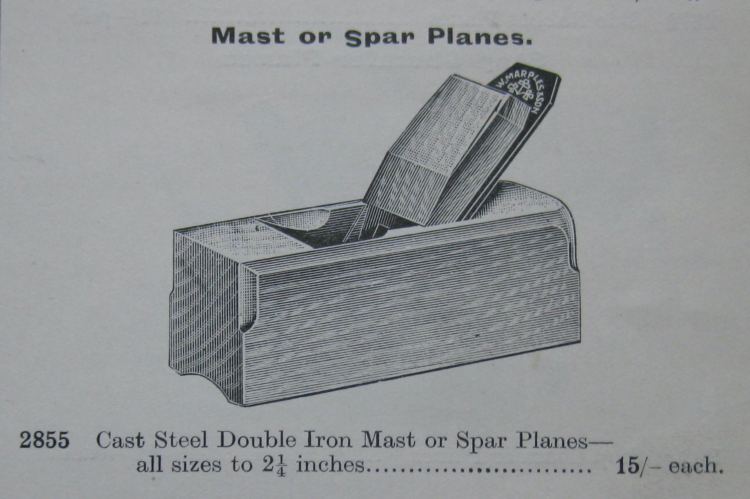
The last catalogue entry for these planes appears in the 1938 Catalogue and it may be safe to assume that they were dropped from manufacture c.1940. The entry is exactly the same as in 1928.
The picture below shows that the Mast Planes had a hand written label on the box, this one being 1.3/4″.
I believe that the stated size was the radius of the circle that it could produce.



The one below is a 2.1/4″ size, the largest produced.



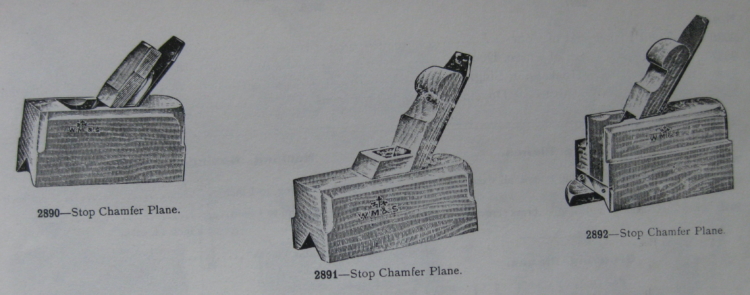
The first indication that these planes were offered for sale by MARPLES is seen in the 1909 Catalogue, although they may well have been introduced before then.
The 1909 entry looks like this:

The 1921 entry is here:

The 1928 Catalogue shows this, but you will note that the price has doubled in 7 years! :

The 1938 entry is shown here:
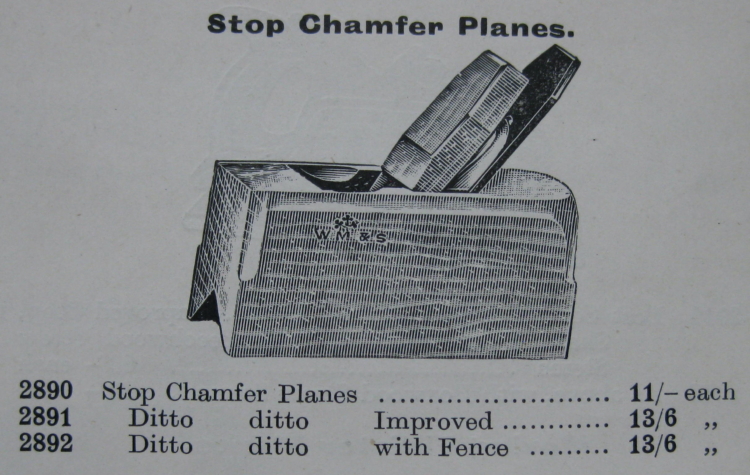
And the last entry in 1959 is below and you will note that #2890 has been dropped from the line:

The last time that these planes were offered for sale is indicated in the Price List of April 1962 when both the #2891 and #2892 were for sale at 66/-.
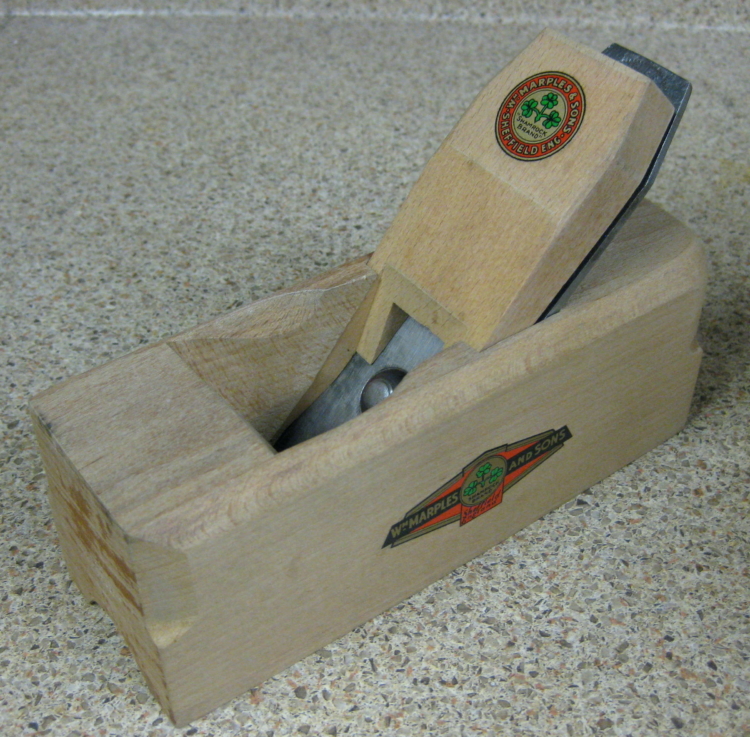
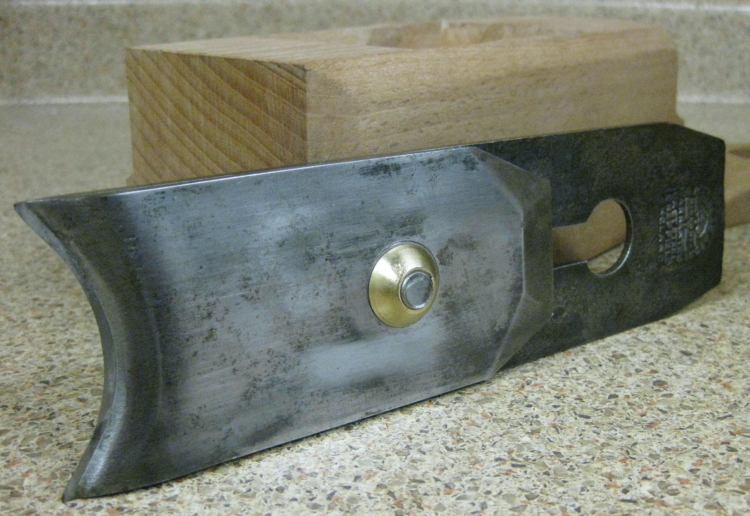
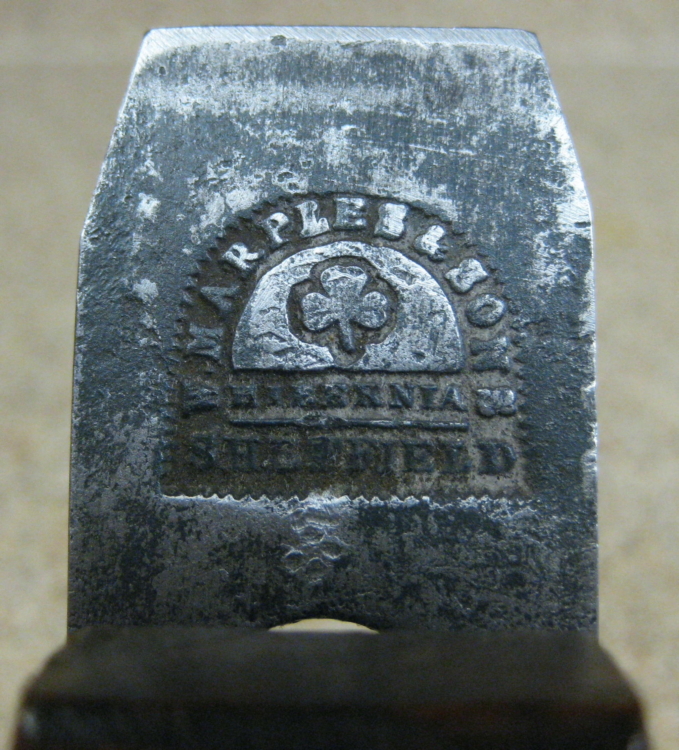
The #2890 Stop Chamfer Plane had a curious metal insert, like a spacer/cap iron, that appears to be made of Aluminium. I must assume that this was the initial plane that came before the ‘Improved‘ and the one with the ‘Fence‘. The cutter on this plane is a ‘Single Shamrock‘, which should have stopped being used after 1875 when the ‘Triple Shamrock‘ emblem was patented.


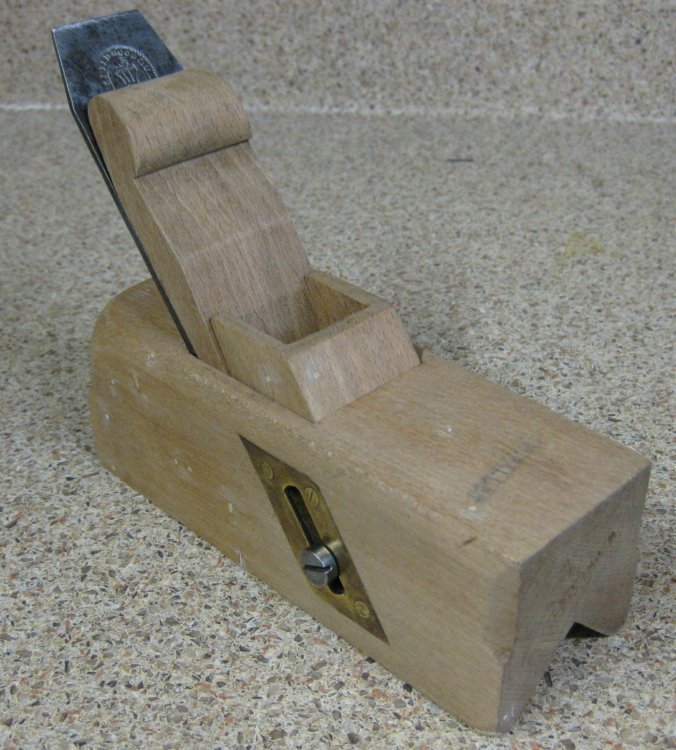
The ‘Improved‘ Plane, #2891 is shown below here. The adjustable shoe, which had a steel lower face, was height adjusted via the side sliding mechanism.
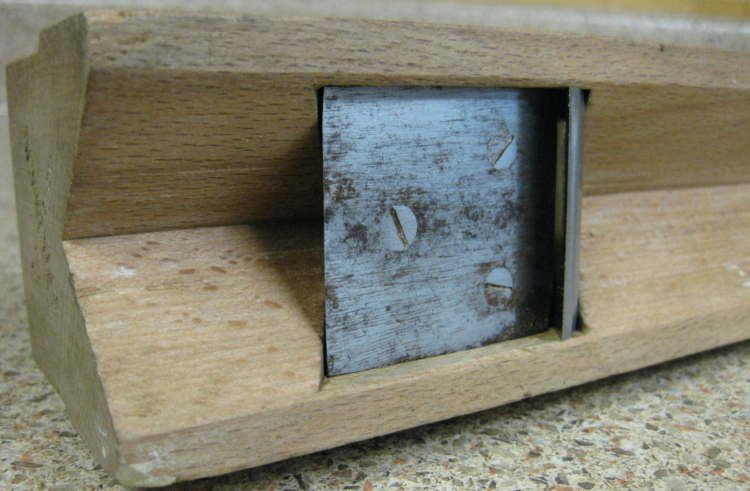
The Stop Chamfer Plane with ‘Fence‘ [#2892] was introduced having 2 different positions available for the fence. This was not a later owner modification, because I have two identical planes.


A later version of #2892 is slightly larger, has a larger wedge and has only one screw position for the fence adjustment.

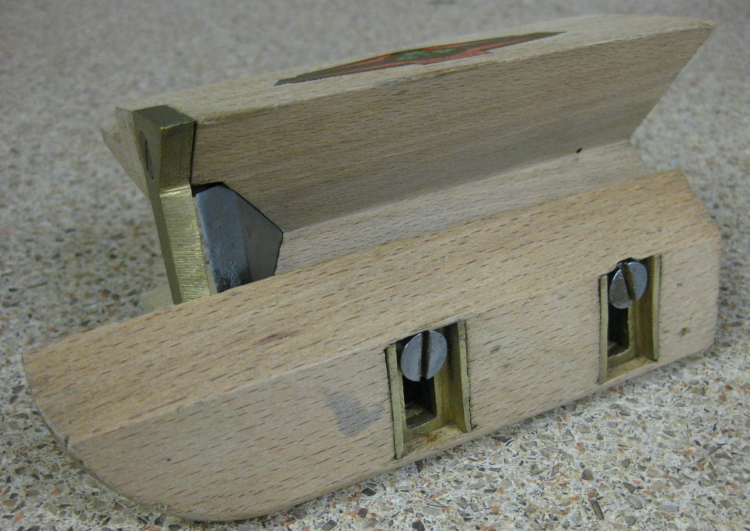
Toward the back end of production of #2892, the ‘wedge’ was replaced with a standard Wooden plane wedge:

These planes, that were used to roughen up the substrate before veneering, are seen as being available in 1862. The 1873 Catalogue lists #850 Coarse or Fine 2″ single iron and #851 as being the same but with a double iron [?]. Mentioned here only because we will never see one of these!!
The 1897 Catalogue shows this:

The 1909 Catalogue shows a new numbering system:


The 1921 Catalogue shows the same cut and exactly the same prices.
The 1928 entry is shown below:

1938 catalogue shows exactly the same as 1928
The 1959 shows these changes:

The last entry to show the availability of these ‘planes’ is in the April 1962 Price List where #2840 is listed at 30/6d and #2841 is 38/-


This next photo is of the plane #2841 with 2 included cutters:

These planes can be found as being available from William MARPLES going back to 1862 when they are listed for sale at 1/8d each. At that time there is also listed an Old Woman’s Tooth plane [OWT] described as – ‘Smoothing Plane Way‘, but I have no idea what the ‘Way’ meant.
By 1873 the basic plane [London/Router Pattern] has been numbered as #904 at 2 shillings a piece.
The 1897 listing shows both a #1032 OWT [Smoothing?] at 2/9d each and a #1033 ‘London Pattern‘ at 2/9d each. The ‘London Pattern‘ was synonymous with ‘Router Pattern‘. They are both here listed under ‘Sundries‘.


The number changes in the 1909 Catalogue having the ‘Router [London]Pattern’ as #2861 at 3/3d and the ‘Smoothing Pattern’ #2860 at 2/9d.

The 1921 Catalogue only lists the #2861 ‘Router Pattern’ plane at 3/3d. Maybe WW1 affected the production of the ‘Smoothing’ OWT, as it is not shown.

But by the 1928 Catalogue both varieties are shown, only that the ‘Router Pattern’ is still listed as #2861 6/6d with a 5/8″ iron and the ‘Smoothing Pattern’ is again now shown, but as a new number #2862 at 5/6d with a 5/8″ iron. { I do not know why the 2862 should be sold for less than the 2861, because to me the former looks to be the more labour intensive to produce.}

The 1938 Catalogue only shows the #2861 ‘Router Pattern’ as being available.
By the 1959 Catalogue this below is the only listing, and you will note that the blade(s) supplied have been increased to both 5/8″ and 1/2″.

The last listing of these planes can be found in the Price List of April 1962 to the 1959 Catalogue , wherein the #2861 is shown as still being available at 31/6d.
Here is a ‘London Pattern‘ or ‘Router Pattern‘ Old Woman’s Tooth Plane:


The ‘Smoothing‘ Pattern:


Again, these planes were offered for sale very early on by MARPLES , at least as early as 1862.
Initially these planes, issued in matching pairs, were available up to No. 12, but seem to be available later in 1897 (or before) up to No.15. and with higher widths being available at extra cost. As you can see, these planes were to be had in either square or skew configuration, skew being more expensive.
Elsewhere under ‘Wooden Planes’ I shall endeavour to write about the various MARPLES marks to be found on Wooden Planes in general, so I shall not elaborate here.
The following extracts from MARPLES Catalogues should show the sizes available, at those times, much better than I can explain in words.
The listing of 1862 is shown here:

In 1873 these prices and [new] numbers are shown:

The 1897 Catalogue shows these listings under a new numbering system:


The 1909 showings are here, but note that the item numbers have again been changed:

1921 shows these listings:

The 1928 Catalogue has the following listings and I note that this is the first time that inch sizes are associated with all the Nominal numbers:

And the 1938 Catalogue shows these planes:

By 1959 the lists are drastically reduced because so few craftsmen existed to carry on the trade of making these planes:

In the price list of April 1962 the numbers 2950, 2951 are still listed but these items do not show in the March 1964 Price list. And thus ended two centuries of these made by hand moulding planes.
Below you will see a set (not matched) of ‘Rounds’ Nos 2-18. {The 2 Smoothing Planes are just ‘supports’!} This set appears to be all ‘square’ examples, as you can see that the wedges are square to the body on their front edges.

These very basic planes seem to have been offered for sale by MARPLES since very early times, as they appear in the 1862 Catalogue:

The next entry that I have is in 1873 when the Square profile [#922] is offered as being available up to 1.1/4″ [in eighths] and then 2d. extra above that value. The maximum width is not stipulated.
The Skew version [#923] is only offered up to 1.1/4″. Boxwood edges are offered on both these issues at twice the price. A Side Rabbet is offered in pairs [#920].
By 1897 the numbers have changed such that the ‘Square‘ variety is #1051 and available up to 1.1/4″ in eighths and then as 1.3/8″; 1.1/2″; 1.5/8″; 1.7/8″ and 2″. The ‘Skew’ planes [#1052] had the same size offering. Both these planes could be had with boxed edges for double the usual price. Item #1049 was a pair of Side Rabbet planes.
The only difference in the 1909 Catalogue is that the numbers have changed. ‘Square’ is #2845; ‘Skew’ is #2846 and #2849 is the Side Rabbet planes as a pair.
By 1921 there is no change from 1909 except that Side Rabbet planes are not offered.
1928 catalogue shows again a similarity in listings to those of before, but again the numbers have been changed. The ‘Square’ plane is now numbered 2875, the ‘Skew’ is now 2876 and the boxwood edges are still available. The re-introduced Side Rabbets are now numbered 2879. Everything else offered is the same as in 1909.
1938 has the same listings as 1928 and the boxed edges are still available.
In the 1959 catalogue the range of both ‘Square’ and ‘Skew’ Rabbet planes has been reduced to: 1/4″; 3/8″; 1/2″; 5/8″; 3/4″; 7/8″ 1″; 1.1/8″; 1.1/4″; and 1.1/2″ only, and no boxwood edges are offered but the side Rabbets # 2879 are still available.
The last listings for these hand made planes are to be found in the April 1962 Price List. Both the 2875 and the 2876 could be had in 1/4″-1.1/4″ & 1.1/2″. The side Rabbet plane #2879 was still only available as a Pair.
The March 1964 Price Lists shows no listings.
The only illustration of a Rabbet plane shown in the MARPLES catalogues is this:
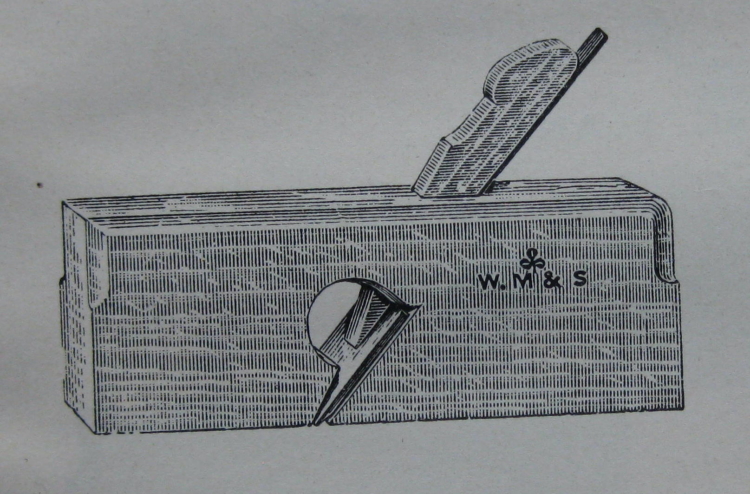
Some Photos of Rabbet Planes:
Here is a 1/4″ ‘Straight’, showing the cut back body:


And a 1.1/4″ ‘Straight’ :


Compare that with a 1.1/4″ ‘Skew’ :


Here is a 1″ ‘Skew’ and below that is a mint 1″ ‘Skew’ in original wrappings!!
But on the plane below you will see that someone has ballpoint pen marked the price at 22/6d. which is the price for a 1″ Skew Rabbet plane in 1961!


The 1862 Catalogue shows that Compass planes were available from MARPLES as a plain plane[!], or with a plated sole; or with a wood stop or with a brass screw stop.
Strangely the 1873 Catalogue only lists a #849 Compass Smoothing plane to 2″, and nothing else?
The 1897 Catalogue shows these and with a new number system:


And the 1909 Catalogue again shows new numbers for these planes:
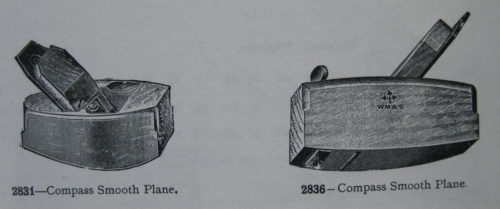
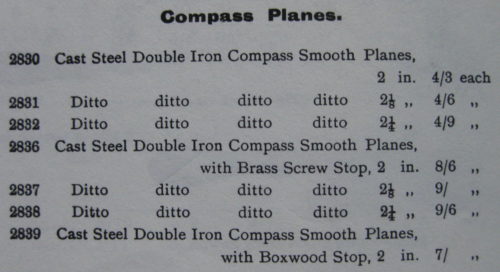
The 1921 Catalogue planes are shown below:

And 1928 is here:

In 1938 these planes are shown as being available and #2836-2839 are eliminated:

By 1959 we come to this:
Prices were 34/-: 36/-; 38/-.but now all under the one item #2830 umbrella.

The last listing of these hand made planes is shown in the April 1962 Price list where they are shown as being available for 40/6d; 42/6d and 45/- each according to blade width. So we can conclude that, as with most other Shamrock Planes [Hand made] they had their demise around 1963.
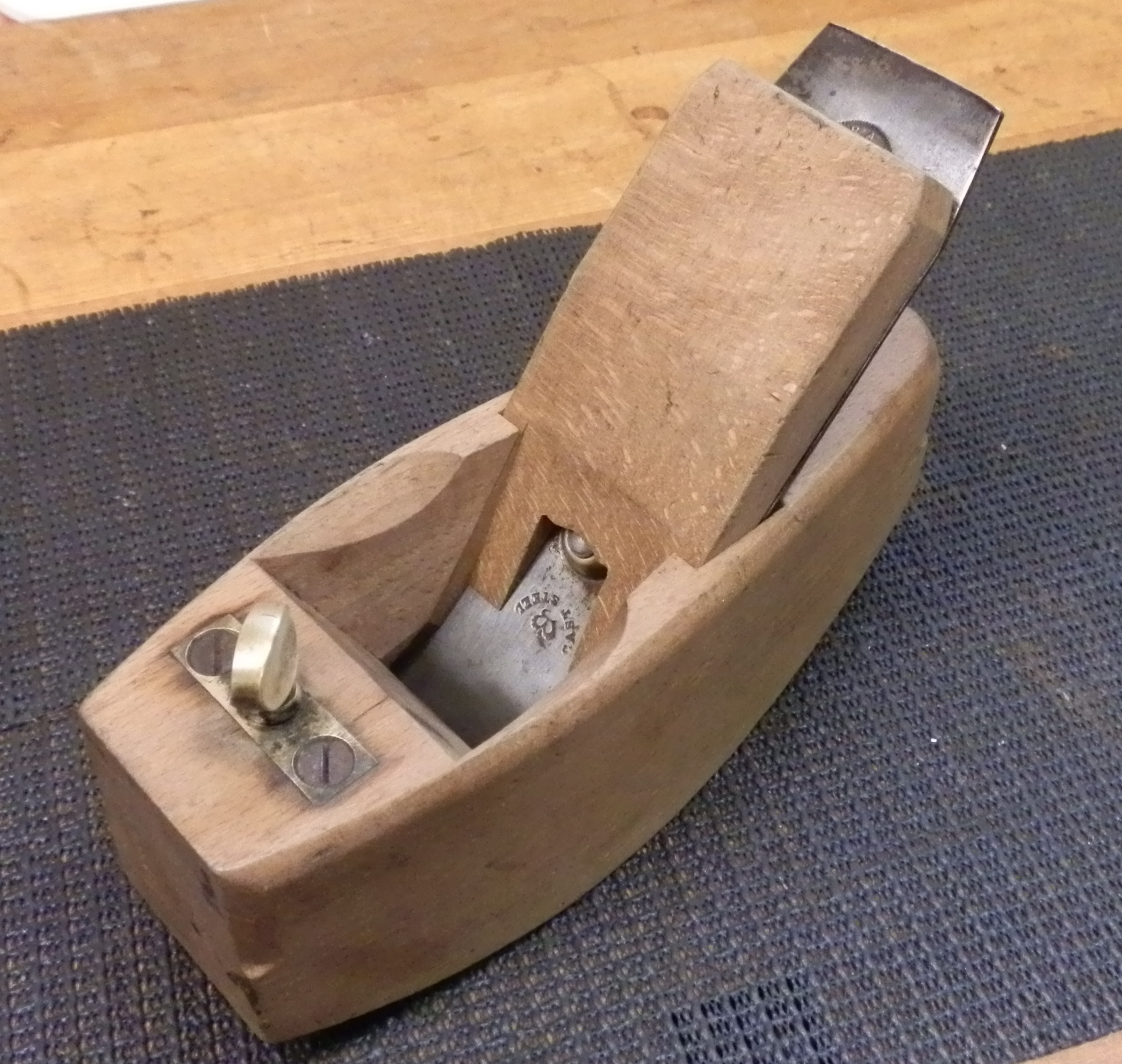
Below is a Compass Smooth Plane with Brass Screw Stop. The latter with a steel ‘skate’ projecting through the sole of the plane and can be thereby adjusted for difference radii.
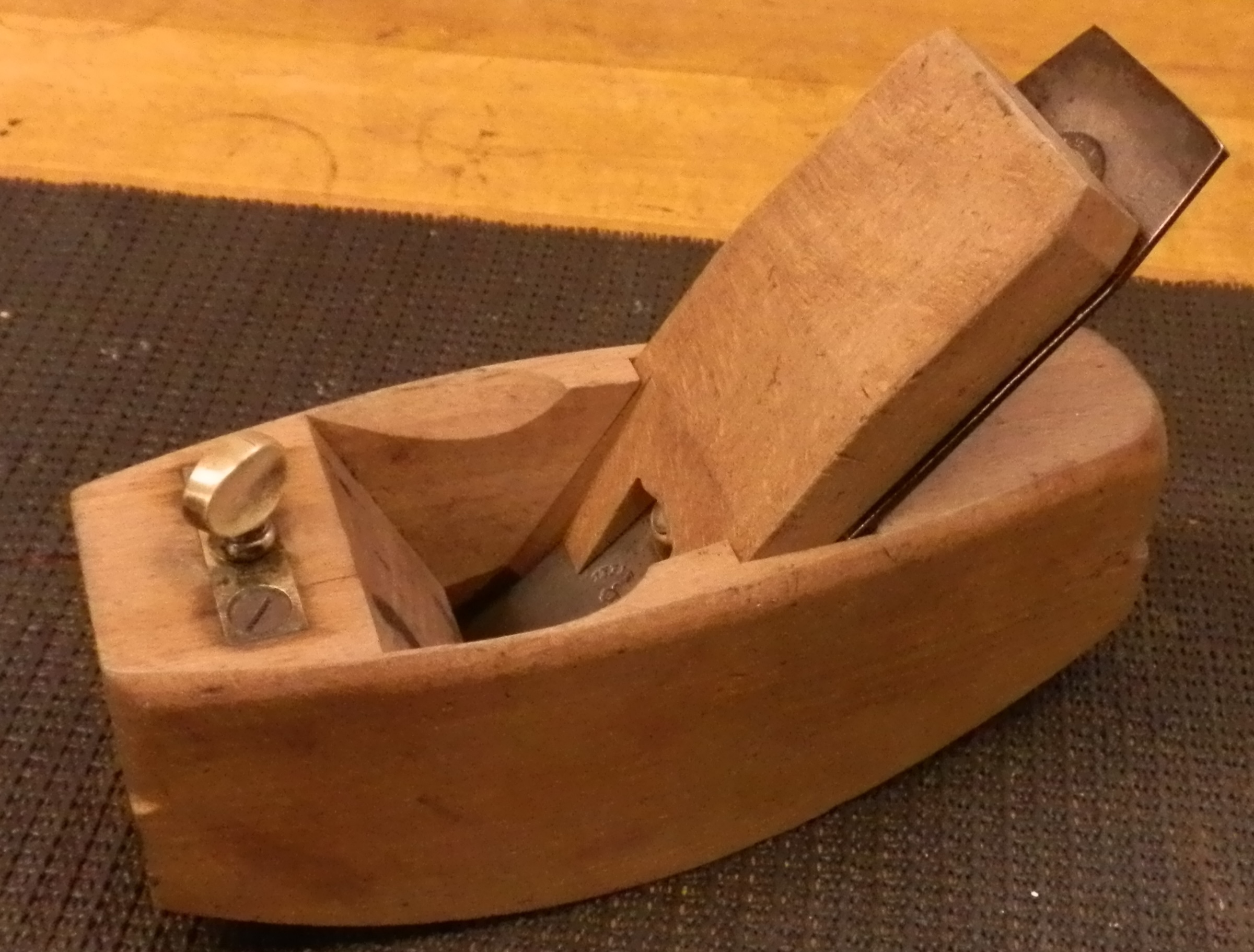
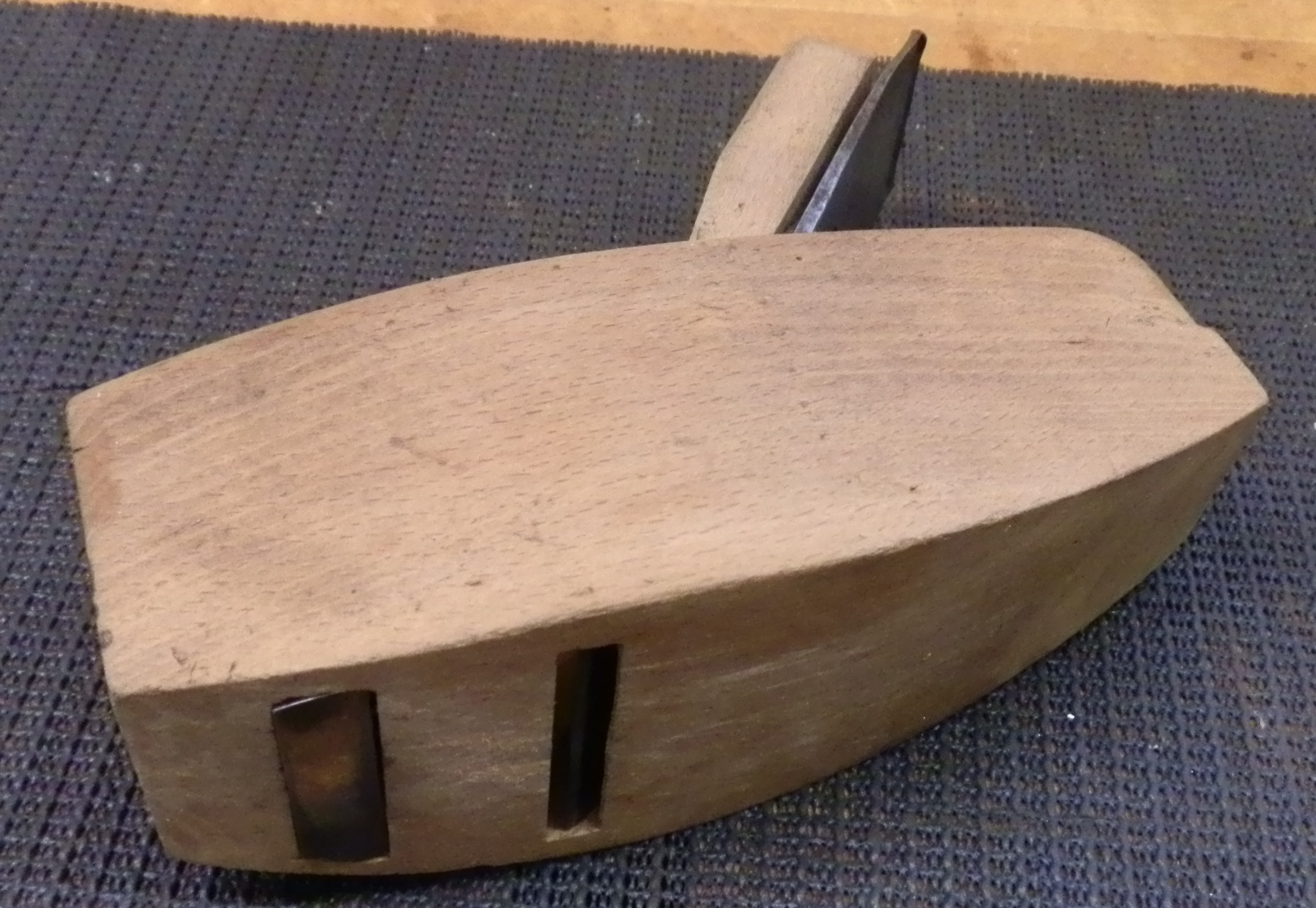
These again were planes that MARPLES had manufactured [by MOSELEY & Son?] for sale quite early on and they first appear in the 1862 Catalogue:

The 1873 entry was thus:
 Note the item # system now.
By 1897, with a different # system we see this:

And of course in 1909 a new numbering system shows these planes being available:
#3021 Common Ogee to 5/8″ and 1/8″ increments to 1″ available at extra cost.
#3026 Quirk Ogee to 1″.
#3028 Quirk Ogee & Astragal to 1″ and 1/8″ increments available at extra cost.
#3031 Quirk Ogee & Quirk Bead to 1″ and 1/8″ increments available at extra cost.
#3023 Grecian Ogee to 1″.
#3024 Grecian Ogee and Bead to 1″.
#3030 Quirk Ogee and Bead to 1″.


 #3030 Q O & Bead
After WWI in 1921 the sizes and planes are exactly as per 1909 Catalogue and surprisingly the prices are exactly the same!
But in 1928 we can see a reduction in the sizes:
#3021 to 1/2″ + 1/8″ increments to 1″ at extra cost.
#3023 to 3/4″ + 1/8″ increments at extra cost
#3024 to 3/4″ + 1/8″ increments at extra cost.
#3026 to 3/4″ + 1/8″ increments at extra cost.
#3028 to 3/4″ + 1/8″ increments at extra cost.
#3030 to 3/4″ + 1/8″ increments at extra cost.
#3031 to 3/4″ + 1/8″ increments at extra cost.
In 1938 AND 1959 only 2 planes are listed, exactly the same as per 1928 specs, #3021 [ Common Ogee] & #3023 [Grecian Ogee].
As with most of the other Shamrock Brand hand made planes the last to be offered for sale were in c.1963.